Where the Lavender Grows in Provence
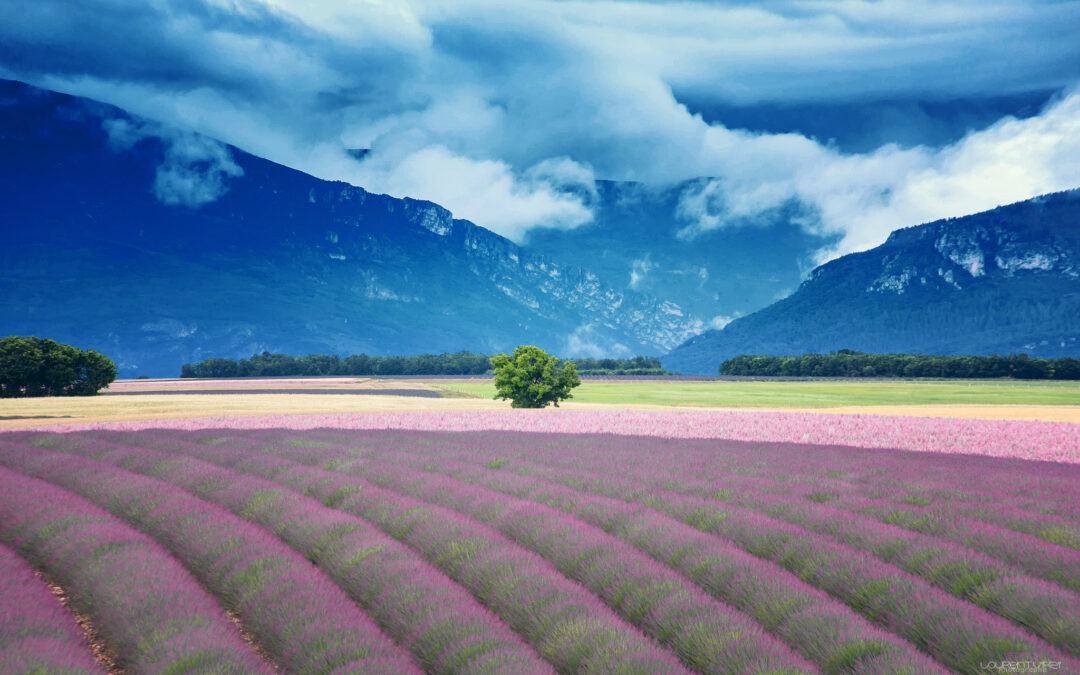
Each summer, Provence turns purple. Lavender spills across plateaus, rolls over hillsides, edges country roads, and perfumes whole stretches of the countryside. But for travelers, one question is central: Where should you go to see it?
To answer that question, know that Lavender in Provence is not confined to one famous field. It grows across several distinct areas, each with its own character. Some are best for sweeping postcard views, others for later blooms, village charm, walking trails, distilleries, or museum visits. In other words, there’s more to see than flowers alone!
Uses for Lavender
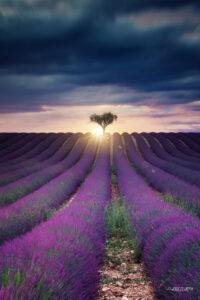
Lavender near Valensole (photo: Laurent Virzi)
Lavender in Provence is not only something to admire in the fields. Lavender is used in perfumes, soaps, essential oils for aromatherapy, cosmetics, and sachets for perfuming drawers. It’s also used in certain foods. It flavors honey, herbal tea, vinegar, and even ice cream. You can learn more about its uses and see (and buy) samples at museums and distilleries near lavender-growing areas. Some of these are mentioned below.
Beyond lavender fields and the industries that surround them, each region also offers nearby towns and interesting places to explore—perfect for weaving a few extra discoveries into your lavender journey.
The Plateau de Valensole
Valensole is the classic lavender destination. It lies about an hour northeast of Aix-en-Provence. Valensole is the Provence of photographs: wide open spaces, long purple rows (with a woman in a white dress and straw hat standing in the center!) It’s a place of golden wheat and distant hills. The Plateau de Valensole is one of the signature spots where travelers can admire lavender in bloom.
This is where you’ll see the most iconic views. Along the roads around Valensole, you may see visitors stop, admire, and move on to another panorama. The village of Valensole itself is also worth a stop, full of Provençal atmosphere with lavender-related visits nearby.
One especially good destination is the Musée de la Lavande in Valensole. It’s a family distillery and museum that presents the history of lavender growing and processing in the region. It is a nice way to add cultural context to the scenery and understand how lavender is harvested and distilled.
Valensole is usually one of the earlier areas to bloom, which makes it a strong choice for travelers visiting in late June or the first half of July.
Worthwhile Places to Visit near Valensole
- Moustiers-Sainte-Marie, famed for its pottery and its stunning setting.
- Nearby Hub: Manosque is the largest town in the vicinity and a gateway to the region.
- Digne-les-Bains is famous for lavender and thermal baths.
- The spectacular Gorges du Verdon is a regional highlight you shouldn’t miss.
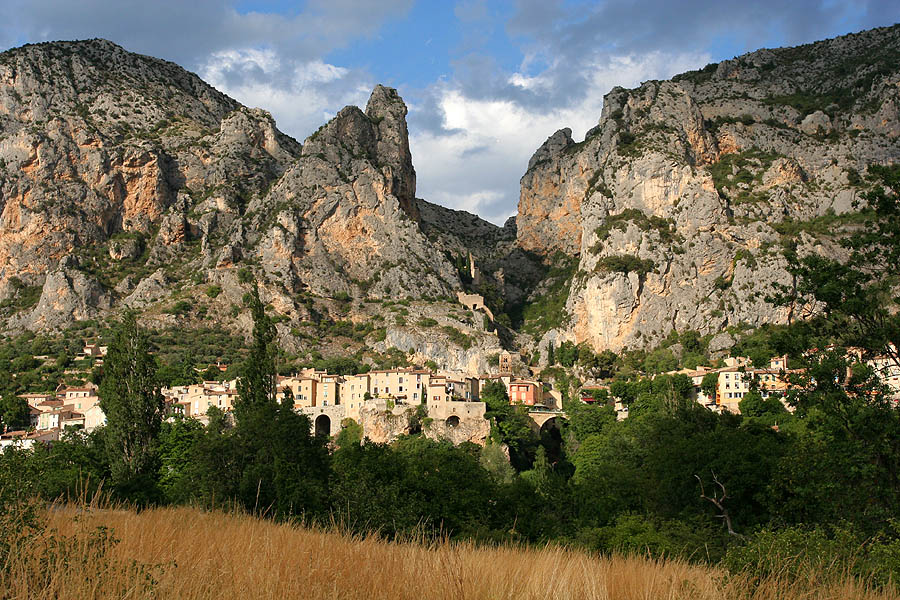
Moustiers-Sainte-Marie
Other close by and notable places to explore lavender fields and Provençal charm include Riez (historic town with Roman ruins), Gréoux-les-Bains (a picturesque spa town near the Gorge du Verdon), Aups (charming market town known for truffles),Tourtour (a medieval village with a panoramic view of the Mediterranean), and Forcalquier (an attractive town with a rich Provence heritage, gateway to the Luberon area.)
Sault and the Pays de Sault
If Valensole is the star of early lavender season, Sault is the place for later trips, such as in July. Because the area sits at a higher altitude, lavender blooms later than in Valensole. Sault often flowers in July and can remain attractive into early or even mid-August, depending on weather.
Sault is also known for the Chemin des Lavandes, a walking path that lets visitors experience lavender country on foot. Instead of only stopping for photos from the roadside, travelers can walk through the landscape slowly to appreciate the countryside itself. Sault offers not just beauty, but also a more immersive experience.
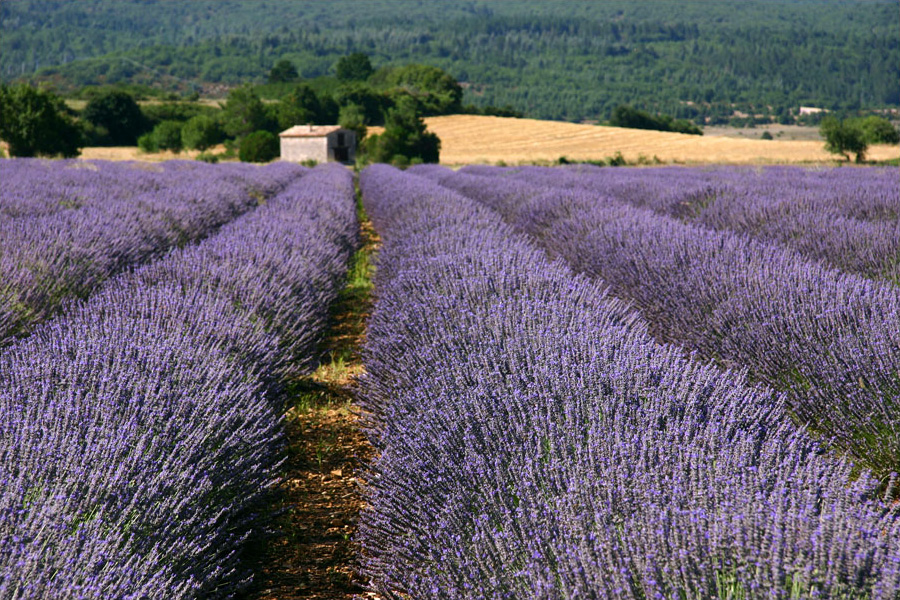
Lavender near Sault (photo Alessandro Vecchi)
Worthwhile Places to Visit near Sault
- Aurel:A short drive to the east. Lavender grows here too. It’s a great place for nature activities, museums, and picturesque beauty.Saint-Christol-d’Albion: To the southeast, it’s a popular center for caving (speleology.)
- Montbrun-les-Bains: A short drive to the northeast, known as one of the most beautiful villages in France, with thermal springs.
- Monieux: Close proximity to Sault, with stunning rocky landscapes. It’s known for the Gorges de la Nesque and the area is popular with hikers.
- Banon: About 20 miles southeast (30 km), this town is famous for lavender and a special regional goat cheese.
- Carpentras: This medium sized town is about 30 miles west of Sault (40 km). It’s known for its daily market, colorful town center, and its view of Mont Ventoux.
The Luberon
The Luberon offers a different kind of lavender trip. Here, fields are often mixed with some of Provence’s loveliest villages and scenic drives. Rather than one enormous plateau, the flowers are woven into the countryside: lavender near stone villages, local markets, and winding roads.
A key lavender stop in this region is the Lavender Museum in Cabrières-d’Avignon, a place to discover “true lavender” from Provence and explore the heritage of local cultivation and distillation. (Reopening April 1, 2026, after its winter closure.)
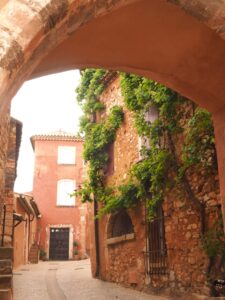
Gordes, Luberon
This area is ideal for travelers who want lavender as part of a broader Provence itinerary, not only as a photo excursion. It works well for those who love villages, scenic drives, and a slower pace. (That would certainly be me!)
There are many gorgeous and memorable places to see in the Luberon area. It’s famous for memorable Cliffside villages that are close to one another. Here are some posts to give you many ideas for excursions in this lovely area.
Near Aix-en-Provence: Terre Ugo
As you drive south toward Aix-en-Provence, one easy-to-reach lavender experience is Terre Ugo, right outside the city. Terre Ugo is a family estate with around 45,000 lavender plants on a 17-acre, or seven-hectare property. It offers visitors a chance to enjoy lavender fields without venturing into the more remote countryside. That makes it ideal for travelers with children, limited time, or a base in Aix-en-Provence.
Lavender farms, distilleries, and related places
Seeing the fields is only part of the pleasure. Lavender in Provence is also about production, perfume, heritage, and local craft. Here are a few worthwhile lavender-related stops and the regions where you’ll find them.
- Musée de la Lavande, Valensole for a museum-distillery experience tied to the region’s agricultural history.
- Lavender Museum, Cabrières-d’Avignon in the Luberon for a deeper look at the story of fine lavender, distillation, and Provençal heritage.
- Terre Ugo near Aix for a farm-style visit close to a major city base.
If you’d like to expand your travels beyond Provence proper, head to La Drôme Provençale, another famous lavender-growing area further north. This would fit well into a longer southern France itinerary. While it lies just outside the strictest definition of Provence, it is often included in lavender travel discussions because of its fields and distilleries.
When should travelers go?
Timing matters when you want to see lavender in full bloom. Lavender season in Provence begins in mid-June, reaches peak beauty in many areas in mid-July. (In early June, the blooms are only beginning.) At higher elevations (such as Sault), it shifts to later in July. Except for in high-altitude areas, most lavender fields are usually in flower by the end of June, while Sault can continue later into the summer.
Because bloom dates vary from year to year, it is always wise for travelers to check current local updates before planning a special detour.
Your Preferred Lavender Experience
Go to Valensole for classic postcard Provence.
Go to Sault for later blooms and a quieter feel.
Go to the Luberon for lavender combined with villages and culture.
Go to Terre Ugo near Aix for an easy lavender outing without a long drive.
Add a museum or distillery to learn more about the tradition and practical uses behind the flowers.
Lavender season in Provence is beautiful partly because it is not limited to one famous stop. It is spread across an entire landscape of plateaus, villages, farms, and distilleries. For travelers, that means there is no single right place to go. There is only the version of Provence that suits them best.